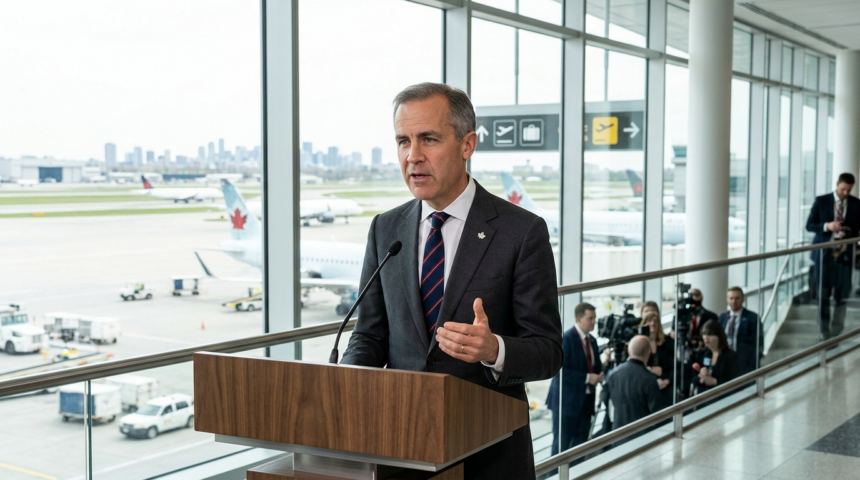
Canada will seek private financing to operate its four largest airports, Prime Minister Mark Carney announced, with proceeds directed into new public investment.
The plan could change how Ottawa funds major infrastructure while preserving capital for other priorities. Key details remain unresolved, including the airports involved, the amount sought, and the terms offered to investors.
A New Use for Airport Assets
Canada’s largest airports are major transport and trade hubs. They support passenger travel, cargo shipments, tourism, and employment across several industries.
Under Canada’s current model, many large airports operate through local, nonprofit airport authorities. The federal government generally owns the underlying land and leases it to those authorities.
Carney’s announcement signals that Ottawa wants to draw more capital from these assets. The money raised would then be reinvested, rather than treated only as short-term revenue.
The government has not yet explained whether the financing would involve new operating concessions, changes to leases, debt backed by airport income, or another structure. Each option would carry different risks for taxpayers and travelers.
Potential Benefits and Public Costs
Airport financing can give governments access to large sums without selling an asset outright. Investors may receive rights to operating revenue over a fixed period, while public ownership remains in place.
Supporters of such arrangements often argue that outside capital can speed up terminal work, improve baggage systems, and fund transit links. It may also free government funds for housing, energy, defense, or other infrastructure.
However, investors generally expect stable returns. At airports, those returns can come from landing fees, terminal charges, parking, retail leases, and other passenger services.
That creates several issues Ottawa will need to address:
- Whether travelers and airlines could face higher fees.
- How service standards and safety obligations would be enforced.
- Whether airport authorities would keep operational control.
- Where the raised capital would be reinvested.
- How financial and operating risks would be divided.
Airlines may resist higher airport charges because those costs can flow into ticket prices. Labor groups may also seek guarantees on jobs, pensions, and working conditions.
Details Will Determine the Outcome
The value of any agreement will depend on contract length, revenue forecasts, regulatory limits, and future construction needs. A large upfront payment can help finance projects now, but it may reduce public revenue later.
Ottawa will also need to show that any financing process is competitive and transparent. Independent valuation would help establish whether the public is receiving fair value.
Long-term agreements require careful safeguards because airport demand can shift sharply. The pandemic showed how quickly passenger traffic and aviation revenue can fall. Economic downturns, fuel prices, and airline consolidation can also affect airport finances.
The announcement places airport policy within Carney’s wider focus on investment and economic growth. Yet its success will depend less on the headline value than on the final terms.
The next steps to watch are the identification of the four airports, the financing structure, and the planned use of proceeds. Ottawa will also face pressure to protect affordability, service quality, and public control while attracting private capital.
If those protections are clear, the plan could provide funds for needed investment. If they are weak, Canada could trade future airport income for a short-term financial gain.