


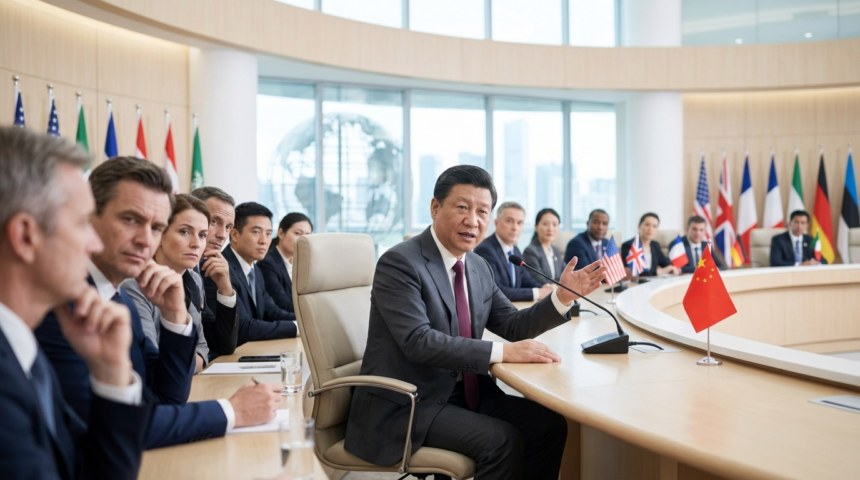
China has rejected G20 pressure over its export-driven growth model while challenging U.S. sanctions on Iran and European trade measures. The disputes place Beijing at odds with several major economies as governments debate trade imbalances, industrial policy, and economic security.
The three disputes are linked by a central question: how much freedom should governments have to protect domestic interests without harming global trade? China argues that foreign restrictions are unfair. Its critics are concerned that Chinese production and exports may place pressure on their industries.
Export Growth Draws G20 Scrutiny
The Group of 20 brings together major developed and developing economies. Its members use the forum to discuss financial stability, trade, debt, and economic growth.
Pressure over China’s “export-driven growth” reflects concern about the flow of Chinese goods into overseas markets. When domestic production grows faster than demand at home, companies often seek buyers abroad. That can lower prices for consumers but create strain for competing manufacturers.
China’s rejection of that pressure signals that it does not accept the premise that its export performance is the main problem. Beijing has often viewed trade competitiveness as a result of investment, production capacity, and supply-chain strength.
Other G20 economies may see the matter differently. Governments facing factory closures or weak industrial growth can come under political pressure to respond. Their options may include tariffs, investigations, subsidies, or tighter import rules.
- Consumers may benefit from lower-priced imported goods.
- Domestic producers may face stronger price competition.
- Trade restrictions can protect some jobs but raise costs.
Iran Sanctions Add Diplomatic Friction
China also challenged U.S. sanctions involving Iran. Washington frequently uses financial and trade restrictions to pursue foreign-policy goals. Such measures can also affect companies and banks outside the United States if they rely on U.S. markets or financial systems.
Beijing’s position points to a wider disagreement over sanctions imposed by one country rather than approved through a broader international process. China maintains commercial and diplomatic ties with Iran, making U.S. restrictions a direct concern for its economic interests.
The dispute carries risks for businesses. Companies operating across several jurisdictions may face conflicting rules. Compliance with U.S. restrictions could limit trade with Iran, while maintaining those ties could threaten access to American markets.
European Measures Face Chinese Pushback
China’s challenge to European trade measures adds a third source of tension. European governments are trying to balance access to affordable products with demands to defend local companies and strategic industries.
From Europe’s perspective, trade action can be presented as a response to unfair competition or state support. From China’s perspective, such measures can look protectionist and discriminatory. These competing claims may lead to investigations, tariffs, or formal trade disputes.
Europe also occupies a distinct position between Washington and Beijing. It shares some U.S. concerns about industrial competition, yet it has major commercial ties with China. That makes a unified policy difficult, especially when European countries have different export interests.
Risks for the Global Economy
Taken together, the disputes show how trade and national security are becoming harder to separate. Export policy, sanctions, and industrial protections now shape diplomatic relations as well as company decisions.
Further restrictions could disrupt supply chains and increase costs. Retaliation by China could also affect foreign exporters seeking access to its large market. Negotiations through the G20 may reduce tensions, but the forum depends on consensus and cannot force members to change policy.
The next developments will depend on whether China and its trading partners choose negotiation or retaliation. The key signals will include new tariffs, sanctions enforcement, trade investigations, and changes to Chinese economic policy. Without compromise, these disputes could deepen divisions among the world’s largest economies and weaken cooperation on shared financial challenges.