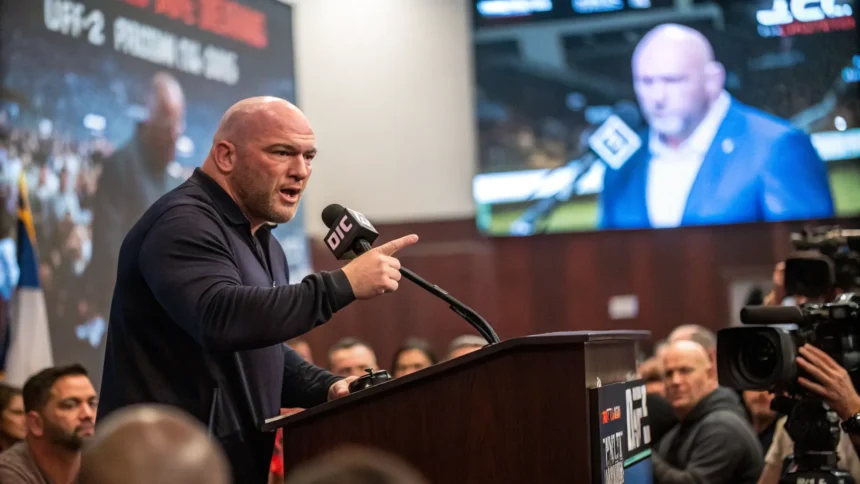
UFC President Dana White moved quickly to condemn a controversial comment made during UFC Freedom 250, calling the statement “nasty and false,” while fighter Josh Hokit sought to explain his side. The clash over words, and their meaning, has spilled beyond the octagon, prompting debate among fans and raising questions about accountability during high-profile sports broadcasts.
The dispute centers on a remark that drew swift backlash online and in the arena. White labeled the comment inaccurate and offensive. Hokit has since tried to defend himself, signaling that the matter will not fade easily. The timing is sensitive for the promotion, which relies on live events and split-second interviews where missteps can spread fast.
What Sparked the Dispute
The flashpoint came at UFC Freedom 250, a card designed for broad appeal and heavy viewership. Within minutes, social media began to circulate clips of the statement, amplifying reactions and demanding clarification from those involved. White responded on the record, rejecting the comment’s content and tone.
“Nasty and false,” White said, dismissing the claim and signaling that it did not reflect the promotion’s position.
Hokit’s response followed, as he attempted to explain the circumstances and defend his intent. He did not retreat from engaging the reaction, which suggests he believes context is on his side. Yet without a shared understanding of the facts, the two accounts remain at odds.
Why Words Matter in Combat Sports
Live fight nights run on adrenaline and attention. Post-fight interviews, walkout moments, and commentary often frame how the public understands what just happened. When a provocative or inaccurate claim lands during a broadcast, it can trigger real fallout.
- Reputation risk for athletes and the promotion.
- Potential confusion for fans seeking clear facts.
- Heightened scrutiny from regulators and partners.
Combat sports have a long record of headline-making moments, some planned and some not. The rapid spread of clips means a single line can define the night more than the scorecards. That creates a premium on clarity and restraint in front of cameras.
Competing Narratives and Public Reaction
White’s description leaves little room for ambiguity. Calling the remark both offensive and false sets a firm line for what the organization considers acceptable. It also signals internally that leadership is willing to challenge statements that cross that line, no matter who said them.
Hokit’s attempt to defend himself points to a different concern: how intent is judged when words are condensed into short clips and headlines. In these cases, context can be contested, and motives can be misread. Yet even well-intended comments can cause harm if they spread misinformation or target individuals unfairly.
Standards, Precedent, and Possible Next Steps
Major promotions often rely on a mix of broadcast guidelines, athlete conduct policies, and post-event reviews to handle incidents like this. The goal is to balance free expression with the need to protect participants and the audience from defamatory or misleading claims.
Typical responses include private warnings, public clarifications, or, in more serious situations, formal statements from the organization. Some incidents end with a joint clarification that sets the record straight. Others lead to longer disputes that overshadow the original sporting achievement.
What This Means for Fans and Fighters
The episode is a reminder that high-visibility platforms come with heightened responsibility. Fans want passionate, unscripted moments, but they also expect accuracy. Fighters and officials are under pressure to deliver both. When that balance fails, trust can suffer.
For Hokit, the challenge will be to present a clear, consistent account that addresses concerns raised by viewers and by White. For the UFC, the priority is to maintain credibility by correcting the record and preventing similar flare-ups.
The immediate question is whether both sides can align on verified facts and move forward. If they do, the story may fade behind the next fight week. If not, the dispute could shape future broadcast policies and the tone of live interviews. Fans should watch for a formal clarification, an agreed timeline of what was said, and any changes to on-air protocols. Until then, the controversy stands as a case study in how quickly a single line can shift the focus from the cage to the microphone.