
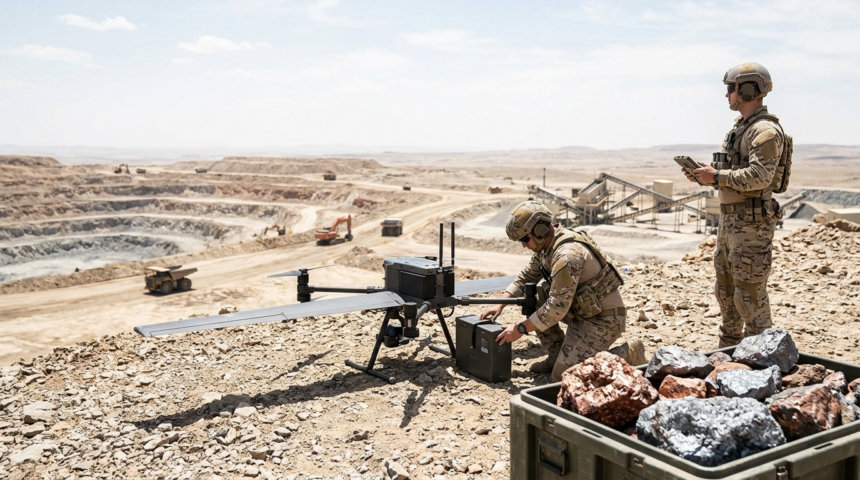
Drones are reshaping military planning and sharpening Western demand for critical minerals used in advanced electronics, batteries, and communications systems.
The shift has created a potential investment theme linking defense technology with mining, processing, and manufacturing. Western governments want more secure supply chains as unmanned aircraft take a larger role in warfare.
However, the opportunity carries major risks. Mineral projects often require years of development, large amounts of capital, and complex environmental approvals. Defense demand can also change as technology and government budgets shift.
Drones Change Military Demand
Modern drones can conduct surveillance, identify targets, carry weapons, and support communications. Their growing use has changed how armed forces assess equipment needs and battlefield costs.
Many systems rely on lightweight materials, semiconductors, sensors, batteries, motors, and secure communications equipment. Those products may require minerals that Western governments consider strategically important.
“Drones have remade the face of warfare,” according to the assessment driving the investment case.
The statement reflects a broader change in defense procurement. Militaries are paying closer attention to systems that can be produced quickly and deployed at scale. That may favor supply chains able to provide steady volumes of processed materials and electronic parts.
Why Critical Minerals Matter
Critical minerals are raw materials viewed as important to economic or national security. Their value often comes from industrial uses and limited sources of supply.
Drone-related demand may reach several parts of the production chain:
- Battery materials for power and energy storage
- Specialty metals used in motors and electronics
- Materials needed for sensors and communications equipment
- Processed inputs used by defense manufacturers
The central policy concern is not limited to access below ground. Mining is only one stage. Refining, processing, parts production, and final assembly can each create supply bottlenecks.
As a result, Western efforts to build a domestic critical minerals industry may involve public funding, purchasing agreements, tax support, or faster permitting. The exact approach will depend on national policy and local rules.
Investors Face a Long Timeline
The investment case rests on rising security needs and efforts to reduce dependence on concentrated foreign suppliers. Companies positioned across mining and processing could benefit if governments commit to long-term purchasing.
Yet increased drone use does not guarantee profits for every minerals company. A mineral may be labeled critical while still facing weak prices, high production costs, or limited commercial demand.
New mines can also face opposition over water use, waste, land rights, and effects on nearby communities. Processing facilities may encounter similar concerns. These issues can delay projects or raise their total cost.
Investors must also distinguish between short-term defense spending and durable industrial demand. Drone designs can change quickly. Manufacturers may reduce mineral use, adopt substitute materials, or shift to different battery and motor systems.
Policy Will Shape the Opportunity
Government action is likely to determine which projects advance. Defense procurement rules can favor local suppliers, while grants and financing can help projects reach production.
Still, industrial independence may be difficult to achieve. Mineral supply chains cross many borders, and domestic production may cost more than established imports. Western governments therefore face a trade-off between lower prices and greater supply security.
The strongest projects are likely to combine viable resources, credible management, financing, permits, and committed customers. Strategic labels alone offer little protection from operational failure.
Drones have tied battlefield technology more closely to industrial capacity. The next phase will test whether Western nations can turn security concerns into producing mines and processing plants. Investors should watch procurement commitments, permitting decisions, and customer contracts, rather than relying only on rising military interest.