
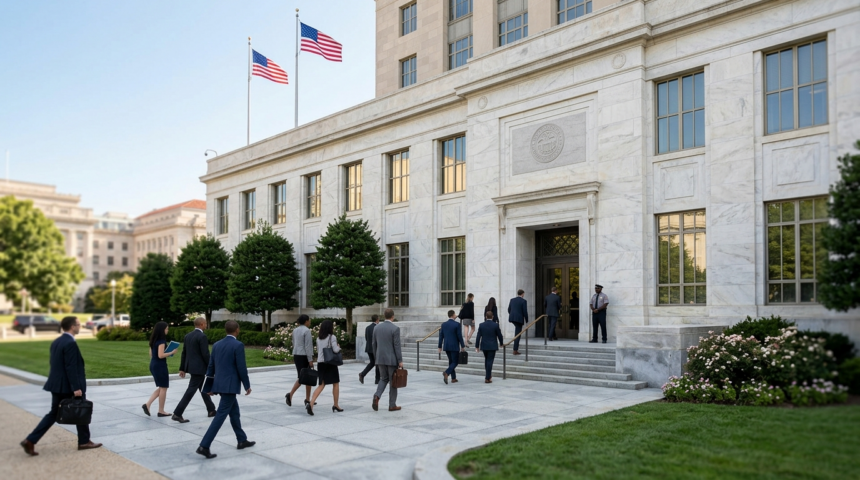
The Federal Reserve approved its first interest rate increase since 2023 on Wednesday and signaled that another hike may follow. The decision marks a shift toward tighter monetary policy, with possible effects on borrowing costs, consumer demand, and financial markets across the United States.
The size of the increase was not specified. Federal officials also did not provide a confirmed date for the next move. Still, the indication of another increase gives households and businesses an important signal about the likely direction of rates.
A Shift in Federal Reserve Policy
The central bank uses interest rates to support stable prices and sustainable employment. Higher rates tend to slow economic activity by making credit more expensive. Lower rates can encourage spending and investment.
Wednesday’s approval ended a period without rate increases dating to 2023. That history makes the decision important, even without details about the size of the adjustment.
The Federal Reserve approved its “first interest rate hike since 2023” and indicated that another increase could follow.
The signal of a second hike suggests policymakers may believe one adjustment will not be enough. However, an indication is not a firm commitment. Future decisions can change as officials review inflation, hiring, wages, consumer spending, and economic growth.
Borrowers Could Face Higher Costs
Federal Reserve decisions can influence rates throughout the economy. The effects often appear at different times because lenders set prices using several factors.
- Credit card balances may become more expensive.
- Businesses may pay more for loans and credit lines.
- New auto and personal loans could carry higher rates.
- Savings accounts may offer improved returns.
Mortgage rates can also react, though they do not move in direct lockstep with the Federal Reserve. Long-term bond yields, inflation expectations, and investor demand help determine home-loan costs.
For consumers, the latest action may add pressure to monthly budgets. For savers, higher rates can provide better income on deposits and short-term investments. The impact will depend on how quickly banks and other lenders adjust their products.
Markets Face a New Rate Outlook
Financial markets often focus as much on future guidance as on the immediate decision. The prospect of another hike could lead investors to reassess company profits, bond prices, and the value of interest-sensitive assets.
Businesses may also reconsider hiring, expansion, or equipment purchases if financing becomes more costly. Smaller companies can be especially exposed because they often rely on bank credit rather than issuing bonds.
At the same time, tighter policy may help restrain price growth if demand is running too strongly. The trade-off is that repeated increases can weaken spending and raise the risk of a broader slowdown.
What Comes Next
The next policy decision will depend on incoming economic evidence and the Federal Reserve’s assessment of financial conditions. Key details remain unknown, including the size of Wednesday’s hike and the timing of any follow-up action.
The central message is clearer: the direction of policy has changed after a pause lasting since 2023. Borrowers, savers, employers, and investors will now watch official statements and new economic reports for signs that a second increase is approaching.
If another hike follows, the cumulative effect could spread further through household credit and business finance. If economic conditions weaken, officials could reconsider. The pace of future increases will determine whether Wednesday’s move becomes a limited adjustment or the start of a longer tightening cycle.