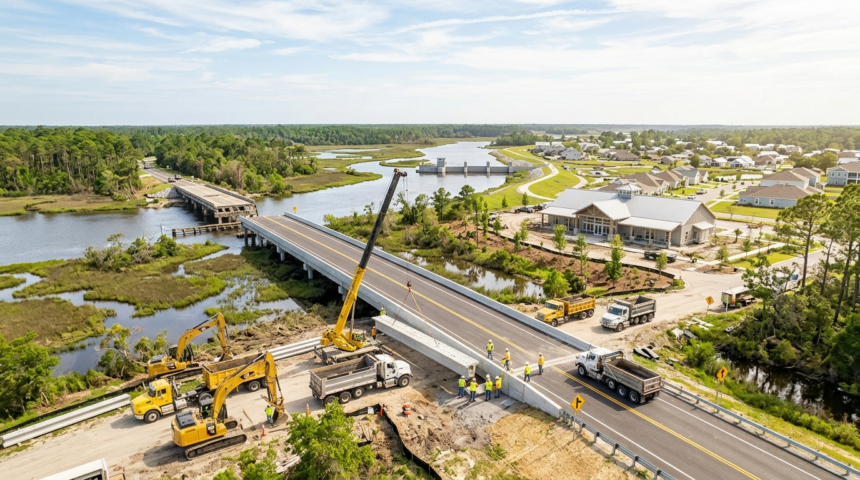
Federal aid for public recovery projects in South Carolina has reached an estimated $744 million, two years after Hurricane Helene caused widespread destruction.
State and local agencies are still rebuilding across 33 affected counties, according to the South Carolina Emergency Management Division. The prolonged work shows how major disasters can leave communities facing years of repairs and financial pressure.
Helene struck South Carolina on Sept. 27, 2024. Hurricane-force wind gusts damaged public facilities and disrupted communities across much of the state.
Public Recovery Extends Across South Carolina
The federal assistance supports public recovery rather than direct payments to individual households. Such funding generally helps eligible governments and public agencies repair damaged infrastructure and cover approved disaster costs.
The reported total averages about $22.5 million for each of the 33 affected counties. However, actual awards are not divided evenly. Damage levels, project costs and federal eligibility rules shape how much each community receives.
The recovery effort involves several layers of government. Local agencies identify damage and oversee projects, while state officials coordinate with federal partners and track reimbursement requests.
Key facts reported by the state include:
- An estimated $744 million in federal public disaster assistance
- Recovery projects spanning 33 South Carolina counties
- Continued rebuilding two years after the storm
- Damage linked to hurricane-force wind gusts
Why Rebuilding Takes Years
Large public projects often move more slowly than emergency cleanup. Agencies must document storm damage, estimate costs and meet federal requirements before receiving reimbursement.
Construction can add further delays. Governments may need to design replacement facilities, secure permits, seek bids and manage shortages of workers or materials.
Some projects also require decisions about whether to restore damaged property or rebuild it to a higher standard. Stronger construction can reduce future losses, but it may increase costs and extend project schedules.
The $744 million estimate offers a broad measure of Helene’s public cost. It does not provide a full accounting of private property losses, business disruption or household expenses.
Funding Brings Relief and Oversight
Federal support can ease pressure on county and municipal budgets. Without it, local governments could face difficult choices involving taxes, borrowing or delays to other public services.
The scale of the aid also creates a need for close oversight. Officials must show that expenses are tied to eligible storm damage and that contracts follow applicable rules.
For residents, the pace of recovery may differ sharply by location. A completed debris operation can bring quick improvements, while repairs to roads or public buildings may remain visible for years.
Future Storms Shape Recovery Decisions
Helene’s impact across 33 counties highlights South Carolina’s exposure to damaging tropical weather, including areas far from the immediate coast. Wind can affect public buildings, utilities and transportation systems over a wide area.
Recovery spending may therefore influence future disaster planning. Agencies can use lessons from Helene to improve emergency communications, damage records and construction standards.
South Carolina’s recovery has moved into a long-term phase, backed by substantial federal assistance but still unfinished. The next measure of progress will be how quickly agencies complete approved projects and whether repaired facilities are better prepared for future storms.