


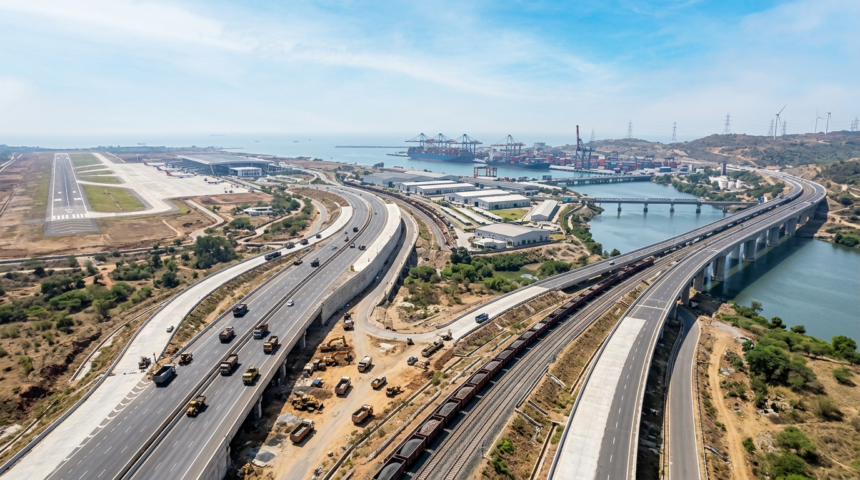
India has approved more than 400 major infrastructure projects worth about Rs 20.23 lakh crore under the PM GatiShakti initiative.
The projects were reviewed through a national planning system designed to coordinate transport, telecommunications, and other public assets. The effort seeks to reduce logistics costs by improving how infrastructure investments are selected and managed across India.
The scale of the approvals shows the government’s push for integrated planning. It also raises the stakes for agencies responsible for funding, construction, and timely delivery.
A Shared System for Major Investments
PM GatiShakti uses a digital platform to bring planning information from different sectors into one system. It now integrates more than 1,800 data layers, including information related to transportation and telecommunications.
These layers allow planners to compare proposed routes with existing roads, railways, utilities, and communication networks. Agencies can identify conflicts earlier and consider links between projects before construction begins.
The approach is intended to address a long-standing planning problem. Infrastructure has often been developed by separate ministries, with each agency working under its own schedule and priorities.
Limited coordination can create gaps. A new industrial area may lack strong rail access, while a completed road may later need excavation for utility lines. Integrated data can help reduce such duplication, although results depend on data quality and cooperation among agencies.
Network Planning Group Reviews Projects
The Network Planning Group reviewed projects involving investments above Rs 500 crore. This threshold places the group’s focus on large proposals with major financial and regional effects.
The approved pipeline can be summarized through three central figures:
- More than 400 infrastructure projects have received approval.
- The projects are worth approximately Rs 20.23 lakh crore.
- The planning platform combines more than 1,800 data layers.
Review at an early stage can help authorities assess whether projects connect with existing infrastructure and planned economic activity. It may also expose land, environmental, or network conflicts before substantial public money is committed.
Approval, however, is not the same as completion. Projects must still pass through funding, procurement, land acquisition, construction, and regulatory stages. Delays during any of these steps could weaken the expected savings.
Logistics Costs Remain the Central Test
The main policy goal is to lower logistics costs. Businesses pay these costs when moving raw materials and finished goods through ports, roads, railways, airports, and storage facilities.
Better connections could shorten travel times and make freight movement more predictable. That could help manufacturers, exporters, farmers, and retailers, especially in regions where weak links increase delivery expenses.
Digital planning may also improve how governments prioritize spending. A project that connects several transport modes could offer greater economic value than an isolated route serving the same area.
Still, the platform’s impact will need to be measured through clear outcomes. Useful indicators include completion times, freight speeds, project cost increases, network use, and actual logistics savings.
Execution Will Determine Economic Gains
The Rs 20.23 lakh crore project pipeline signals a large commitment to coordinated infrastructure. Its success will depend on whether central and state agencies keep records current and act on the platform’s findings.
Close monitoring will also be needed to ensure that coordination does not become another administrative step. Faster decisions must still meet financial, environmental, and social safeguards.
PM GatiShakti has created a common planning structure for hundreds of high-value projects. The next test is delivery. Progress reports, cost controls, and evidence of lower freight expenses will show whether integrated planning produces lasting economic gains.