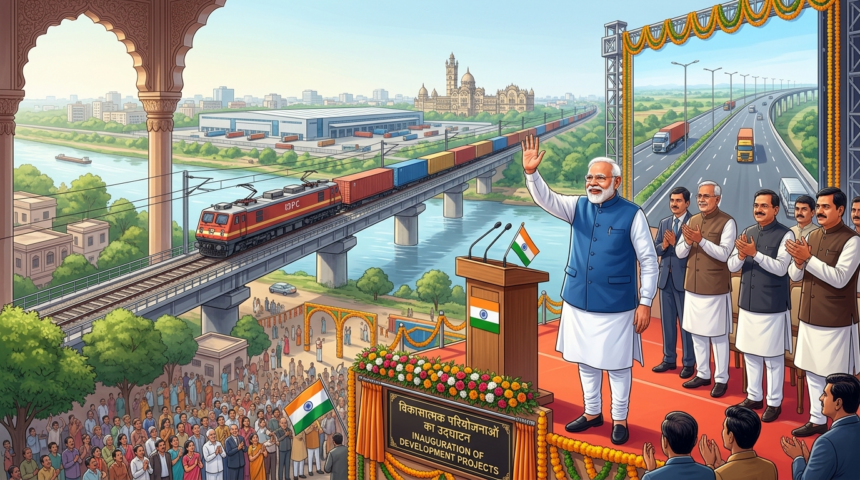
Prime Minister Narendra Modi has inaugurated development projects worth more than Rs 35,000 crore in Vadodara, placing freight transport at the center of India’s infrastructure plans.
The package includes key sections of the Western Dedicated Freight Corridor, along with railway and highway upgrades. The government says the work will improve national connections, speed the movement of goods, and support India’s goal of becoming a fully developed country.
Freight Corridor Takes Center Stage
The Western Dedicated Freight Corridor is designed to give cargo trains their own high-capacity route. Separating freight and passenger services can reduce congestion on existing railway lines.
The newly highlighted sections represent an important stage in the wider corridor project. Better freight links could shorten delivery times for manufacturers, exporters, ports, and logistics companies.
Dedicated freight routes may also allow Indian Railways to run passenger services more reliably. Heavy cargo traffic often competes with passenger trains for space on shared tracks.
Modi described the corridor sections as an important national achievement. He linked their completion to a wider effort to modernize transport and strengthen economic capacity.
Rail and Highway Work Expands the Package
The Vadodara announcement was not limited to freight rail. It also covered several railway and highway improvements intended to strengthen connections within Gujarat and across India.
The projects focus on three broad goals:
- Increasing the speed and capacity of freight movement.
- Improving railway and highway links for people and businesses.
- Supporting long-term industrial growth through better transport access.
Vadodara is an important industrial center with links to manufacturing and trade routes. New transport capacity may help local companies reach suppliers, ports, and consumer markets more quickly.
However, the final gains will depend on execution. Large infrastructure projects require land coordination, steady funding, safety controls, and links to local transport networks.
Economic Benefits Depend on Delivery
Infrastructure spending can create construction jobs and demand for materials in the short term. Its larger value comes from lowering transport costs and improving the reliability of supply chains.
For businesses, fewer delays can reduce the need to hold extra stock. Faster cargo movement can also support exporters whose contracts depend on strict shipping schedules.
The Rs 35,000 crore figure signals the scale of the government’s investment push. Yet project value alone does not measure results. Completion dates, freight volumes, travel times, and maintenance standards will offer clearer tests.
Communities may also assess the projects through local effects. These include access to jobs, road safety, noise, construction disruption, and the treatment of people affected by land acquisition.
Infrastructure Tied to National Development
Modi placed the projects within India’s broader ambition to become a fully developed country. Modern railways and highways are central to that plan because they connect production centers with markets.
The freight corridor may be especially important as India seeks a larger role in global manufacturing. Companies weighing factory locations often examine transport reliability, port access, energy supply, and delivery costs.
The Vadodara inaugurations mark progress in physical construction, but attention will now shift to operations. The strongest evidence of success will be sustained use, lower logistics costs, and dependable service.
India’s next challenge is to convert major capital spending into measurable public and economic gains. Freight performance, passenger punctuality, project completion, and local outcomes will show whether the package meets that test.