


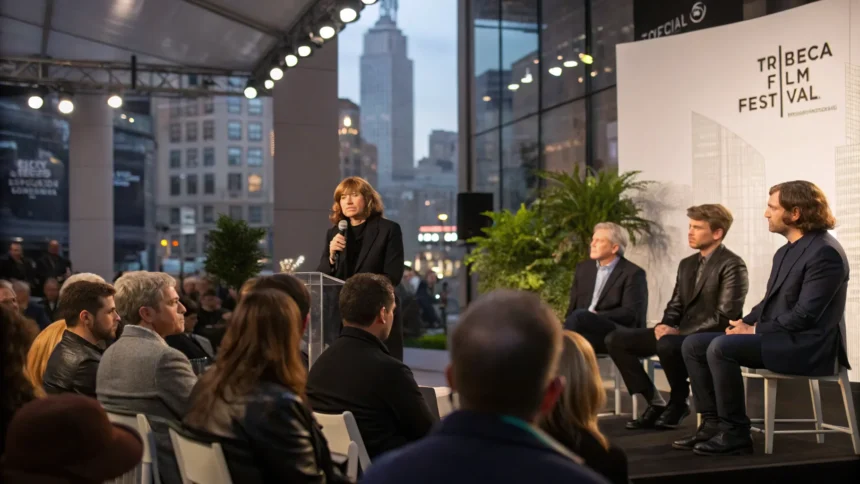
At a New York gathering tied to the Tribeca community, producer Jane Rosenthal pushed a direct message to the film and music worlds: influence follows money and access. With actors and artists, including Myha’la and singer Maggie Rogers, in the audience, she framed the debate in stark terms of control and opportunity.
Rosenthal, a co-founder of the Tribeca Festival, urged decision-makers to move past surface-level inclusion. She called for changes that decide who gets to make work and who is heard. The remarks landed as studios, streamers, and labels face renewed pressure to back a wider range of voices.
A Conversation About Power, Not Just Presence
“This has never just been about representation. It’s about power. Who gets funding? Who gets the microphone?”
Rosenthal’s words drew attention to the gatekeeping that shapes careers. Funding often determines which stories are greenlit, marketed, and reviewed. The microphone, literal and figurative, speaks to who gets interviews, playlist slots, festival premieres, and press attention.
Her comments reflected a view shared by many artists who say progress has stalled at the level of hiring and panels. They argue that the core problem is who controls budgets and final cuts, and who sets promotion priorities.
Tribeca’s Role and a Broader Shift
Since its founding after 9/11, Tribeca has promoted independent voices and urban cultural recovery. It has grown into a major showcase for film, television, and music. Over the years, the festival has launched programs for first-time creators and highlighted works that struggle to find traditional backing.
The latest conversation fits a wider shift in festivals and awards shows. Organizers are reassessing selection criteria, jury makeup, and mentorship pipelines. Some funds now target first features, shorts by underrepresented creators, and live performances by emerging artists.
Why Budgets and Access Still Matter
Many producers note that development money shapes what audiences see years later. Early grants can secure key talent and time for rewrites. They also unlock larger investors and distribution talks.
In music, touring support and marketing budgets drive discovery. Artists with label resources often win radio adds, late-night bookings, and prime festival slots. Independent musicians may have strong followings online yet struggle to scale without structured support.
- Financing sets the range of stories and sounds that reach audiences.
- Marketing and press amplify some creators over others.
- Festival and playlist placements build momentum that leads to long-term careers.
Supporters, Skeptics, and the Path Ahead
Supporters of Rosenthal’s stance say transparency in greenlighting and marketing would help. They call for clear criteria on investments, credits, and promotion plans. They also point to mentorship and paid apprenticeships as tools to widen the pipeline.
Skeptics warn that rigid targets could limit creative risk or lead to box-checking. They argue that quality and audience interest should anchor choices. They also say the rise of digital platforms offers new routes, even if they are crowded and inconsistent.
Artists like Myha’la, known for roles that challenge industry norms, and Maggie Rogers, who built an audience through both major-label and independent paths, reflect the debate. Both have navigated traditional and online channels to reach fans. Their presence signaled that creators are watching how institutions respond.
What Changes Could Look Like
Institutions could add open calls with blind review to reduce bias. Festivals might expand micro-grants that cover development and post-production. Labels and promoters could set aside tour and marketing funds for early-career acts outside mainstream formats.
Partnerships with schools and community groups could lower entry costs. Public reporting on who receives funds and stage time would create accountability. These steps would not replace taste or risk-taking but could widen the field of who gets a fair shot.
Rosenthal’s remarks brought urgency to a long-running issue: visibility is not the end goal. The focus is on who gets the green light and who gets heard. As festival season continues, watch for concrete funding pledges, open submission tracks, and clearer promotion policies. Those moves will show whether the industry is ready to share not just the stage, but the decision-making power behind it.