


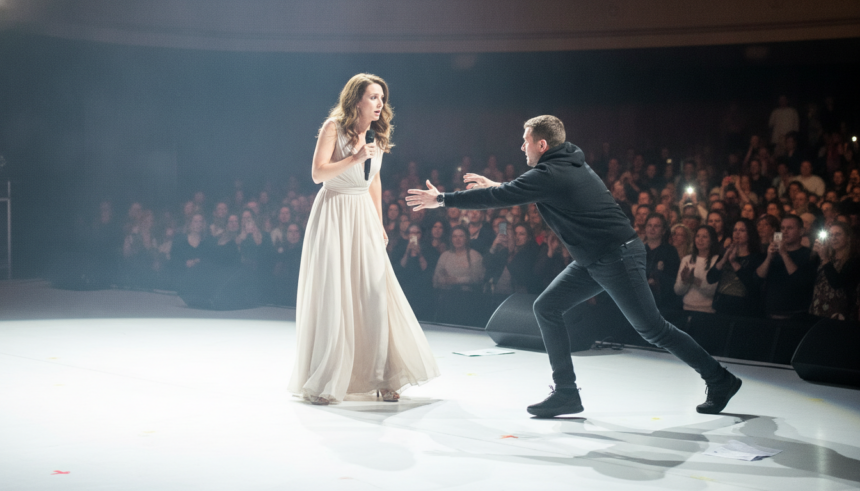
A short video of a 36-year-old actress being approached by a man while speaking onstage has ignited new debate over performer safety at live events. The clip, which spread quickly across social media, appears to show the moment an audience member or uninvited individual reached the stage during a public appearance. The incident has renewed questions about venue security, crowd control, and the thin line between fan enthusiasm and unsafe behavior.
While details about the event, location, and identities remain limited, the scene has drawn wide reaction from fans, performers, and organizers. Some viewers praised the actress for staying composed. Others asked why security did not prevent the approach sooner. The discussion reflects a growing concern about stage incursions and the duty of venues to keep performers safe.
What the Video Shows
In the video that has since gone viral, the actress, 36, was speaking onstage when she was approached from behind by a man and turned around to face him.
The clip is short and offers little context. It does not make clear how the man reached the stage or whether security was present nearby. Viewers have debated whether the approach was a misunderstanding, an attempt to interact, or an intentional breach. Without audio or longer footage, the motives remain unclear.
Still, the visual has been enough to fuel wider concerns. Many public figures rely on stage barriers, security teams, and access checks. When those safeguards fail, even briefly, the result can unsettle performers and audiences alike.
Rising Concern Over Onstage Incursions
Safety at live events has drawn more attention in recent years. High-profile incidents have included the onstage attack of comedian Dave Chappelle in 2022 and injuries to artists caused by objects thrown from the crowd. In 2023, singer Bebe Rexha was struck in the face by a phone during a show, prompting renewed calls for stricter enforcement.
Experts in event management say the risks vary by venue size, staffing levels, and crowd layout. Smaller venues often allow closer access, which can improve fan engagement but can also reduce reaction time for staff. Larger arenas rely on layered security, but even these systems face pressure when crowds surge or when a single person moves decisively.
- Clear stage perimeters can deter unsafe approaches.
- Dedicated spotters can track unusual movement in the crowd.
- Rapid response teams can intercept intruders within seconds.
Balancing Access and Security
Promoters walk a fine line. Fans seek proximity and spontaneity. Artists often want a friendly, open setting. But openness can raise risks. Industry guidelines generally call for visible barriers, rehearsed response plans, and clear rules for meet-and-greets. These measures help reduce confusion when a person attempts to reach the stage.
Performer advocates argue that even brief intrusions can cause lasting stress. They point to protocols that prioritize the artist’s exit path, lighting cues that signal a lockdown, and coordinated roles for staff stationed at aisles and wings. Supporters of lighter-touch security warn that aggressive measures can create tension and may escalate minor incidents. They prefer de-escalation training and quick communication before physical intervention.
The Social Media Effect
Viral clips can change how events are discussed and managed. A short video often lacks full context but can trigger immediate pressure on venues to act. Organizers monitor online reactions and may adapt policies after a single incident. That can mean higher staffing costs, more screenings, and tighter crowd flow.
Some performers now brief their teams to expect audience filming at all times. They plan for how footage might appear without context and prepare statements that explain what happened. The aim is to reassure fans and avoid rumors that can spread after a dramatic moment on camera.
What Comes Next for Live Events
Without more details about the incident, many questions remain. Was the approach a security lapse or an isolated mistake? Did staff intervene off-camera? What, if any, changes will the venue make? The answers will shape whether this moment becomes a footnote or a catalyst for stricter controls.
For now, the clip has added to a steady stream of reminders that stage safety is never guaranteed. Venues may review their staffing plans and barrier setups. Performers and managers may revisit show briefings and exit routes. Fans, too, may face clearer rules about movement near the stage.
The broader takeaway is simple: a safe show depends on planning, training, and quick judgment. As more moments are captured and shared online, live events will keep adjusting. Viewers will be watching to see if those changes prevent the next close call.
