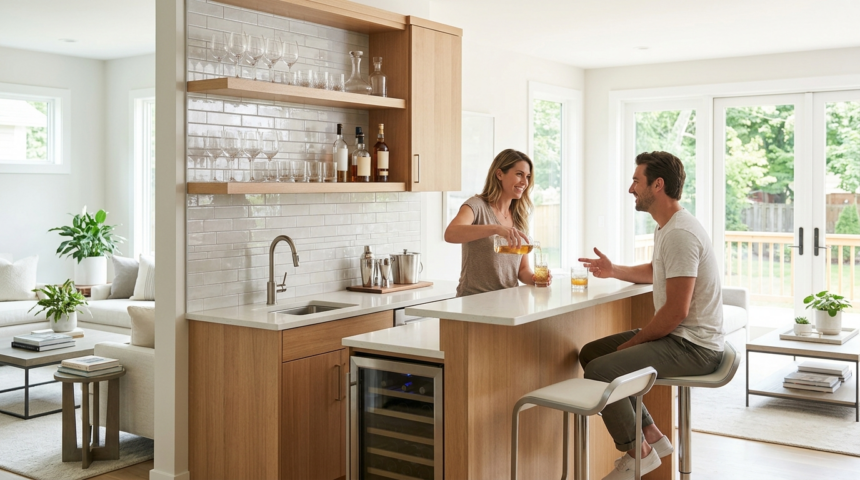
Wet bars quietly regained favor among U.S. homebuyers, despite years of claims that the basement feature had fallen out of style. National Association of Home Builders data shows demand roughly doubled from 2001 to 2012, reaching about 4 percent of new-home requests.
The share remained modest, but the increase was measurable. It also challenged a common design narrative: The basement wet bar did not disappear. Instead, demand persisted outside the spotlight and began rising again.
A Familiar Feature Finds New Demand
A wet bar is a serving area equipped with running water and a sink. It may also include cabinets, a refrigerator, counter space and storage for glassware. Unlike a dry bar, it allows homeowners to prepare drinks and clean up without visiting the main kitchen.
The feature has long been linked to finished basements and home entertainment. Yet many design writers had declared it outdated before the reported increase in buyer interest.
“The basement wet bar, it turns out, never actually left. It just went quiet.”
The NAHB figures suggest demand was near 2 percent in 2001 before climbing to about 4 percent by 2012. That means wet bars were still a minority request, even after their share roughly doubled.
- Demand roughly doubled between 2001 and 2012.
- Wet bars reached about 4 percent of new-home requests.
- The increase occurred after the feature had widely been labeled obsolete.
Why a Small Share Still Matters
Four percent may appear limited when compared with standard features such as kitchen islands or extra bathrooms. However, specialty amenities do not need mass adoption to influence builders and remodelers.
For builders, the trend can support optional entertainment packages rather than standard installation. Offering a wet bar as an upgrade may appeal to a narrow buyer group without increasing costs across every home.
The data also highlights a gap between design commentary and consumer behavior. Styles can lose media attention while retaining practical value. Running water near a basement gathering area can reduce trips upstairs and keep guests away from the main kitchen.
At the same time, the figures do not show universal demand. Most new-home requests in 2012 did not include a wet bar. Buyers must also weigh construction costs, plumbing needs, maintenance and the amount of floor space required.
Builders Face a Targeted Opportunity
The reported rise points to selective interest rather than a full revival. Builders may gain more from flexible plans than from installing wet bars in every finished basement.
A preplanned plumbing connection could let buyers add the feature during construction or later. That approach may reduce the risk of dedicating space to an amenity that future owners do not want.
The trend also offers a broader lesson about housing preferences. Features rarely move in a straight line from popular to obsolete. Some remain useful, then return to view as entertainment habits, household needs or available space change.
Future data will determine whether the increase continued after 2012. For now, the available numbers show that reports of the wet bar’s demise were premature. Its next phase will depend on whether buyers view it as a useful gathering amenity or an optional expense.