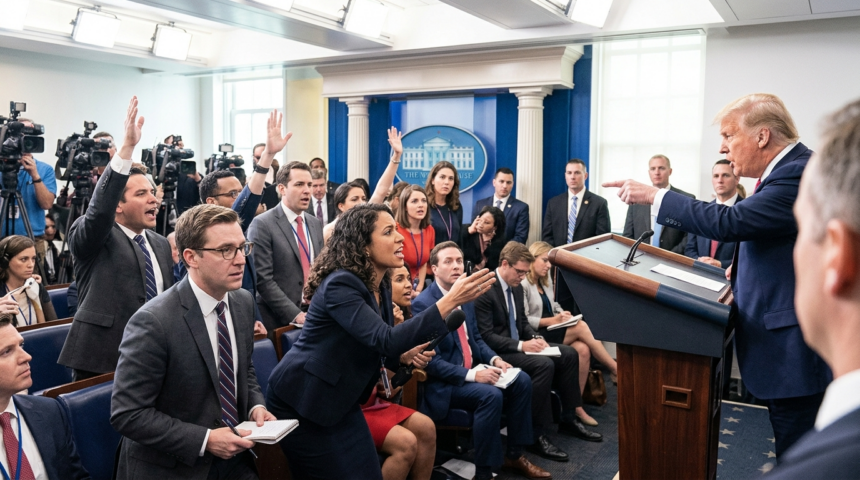
The White House press pool has become the center of a free speech dispute between President Donald Trump and major news organizations. The conflict raises urgent questions about whether an administration can influence coverage by controlling reporters’ access to the president.
The press pool is a small, rotating group of journalists that follows the president when space is limited. Its members share reports with a wider network of news outlets, allowing the public to receive timely information about presidential actions.
Why the Press Pool Matters
Presidents often speak or make news outside scheduled briefings. Reporters in the pool document those moments aboard Air Force One, inside the Oval Office, and during other restricted events.
Pool reports can include presidential comments, descriptions of meetings, travel details, and observations about unexpected events. Newsrooms across the country depend on those reports, even if they do not have a correspondent present.
The system also serves a public purpose. No administration can provide every outlet with access to rooms that have strict space and security limits. A shared pool helps distribute information under those conditions.
Control over pool membership can therefore carry major consequences. Excluding an organization may reduce its ability to question the president and independently observe government activity.
A Dispute Over Editorial Independence
The current fight reflects a wider conflict between Trump and news organizations he considers unfair. Trump has often criticized major outlets, while journalists have argued that officials should not use access as a reward or punishment.
The central legal question concerns the First Amendment. Courts have generally recognized that the government may set reasonable access rules. However, officials face limits if they discriminate against journalists because of their reporting or editorial choices.
News organizations also distinguish access from government approval. They argue that allowing reporters into limited spaces does not require the White House to endorse their work.
The administration, meanwhile, has broad authority to manage presidential security and event logistics. White House officials may contend that elected leaders should have greater control over which reporters enter sensitive or crowded settings.
Competing Interests Shape the Conflict
The dispute involves several interests that do not always align:
- Journalists seek equal treatment and protection from retaliation.
- The White House seeks control over security, scheduling, and limited space.
- News outlets want independent reporting rather than official summaries.
- The public needs prompt and reliable information about presidential decisions.
These concerns make the press pool more than an internal media arrangement. Decisions about membership can shape which questions reach the president and which observations enter the public record.
Legal and Industry Effects
A court challenge could help define how First Amendment protections apply to presidential access. Any ruling may affect future administrations, regardless of party, by setting standards for removing or excluding reporters.
The outcome could also change how the pool operates. For decades, the White House Correspondents’ Association has played a major role in arranging rotations. Greater administration control could weaken that independent structure and give officials more influence over access.
Supporters of a traditional pool system view it as a safeguard against political favoritism. Critics may argue that established news organizations have held privileged positions for too long and that newer outlets deserve greater representation.
Those views are not mutually exclusive. The pool can include a wider range of organizations while still using clear and neutral standards. Published rules, consistent enforcement, and an appeals process could reduce claims of retaliation.
The immediate fight concerns access, but the larger issue is accountability. Future court decisions and White House policies will show whether press access remains guided by independent procedures or shifts further under presidential control. The answer will affect not only journalists, but also the public’s ability to scrutinize the nation’s most powerful office.