
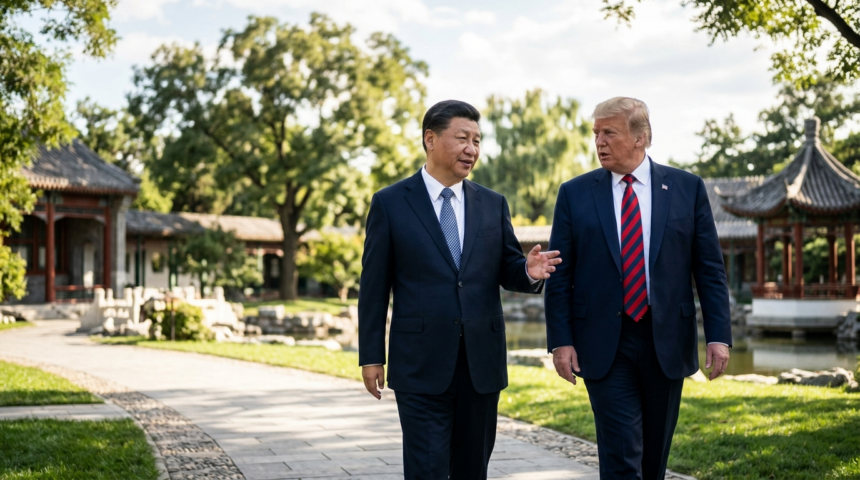
Chinese President Xi Jinping appears to see a path away from destructive rivalry with the United States, months after raising the issue with President Donald Trump in May.
The apparent shift offers a cautious sign of stability between the world’s two largest economies. It also suggests that direct talks may have eased some concerns in Beijing about the direction of Trump’s China policy.
A Question With Global Consequences
Xi asked Trump in May whether their countries could avoid a damaging contest. The question reflected a central concern in relations between Washington and Beijing: whether competition must lead to open confrontation.
Xi now appears to believe that such an outcome can be avoided. That assessment does not mean the countries have resolved their disputes. It suggests both governments may see value in limiting the costs of their rivalry.
The stakes extend far outside the two capitals. Decisions by China and the United States affect trade, investment, technology, security, and diplomatic ties across much of the globe.
Competition Without Open Conflict
Washington and Beijing have competing economic and strategic goals. Each government also wants to protect domestic industries and maintain influence abroad.
Yet competition can take several forms. It can remain controlled through negotiations and regular communication. It can also worsen through tariffs, military pressure, export limits, and retaliatory measures.
Xi’s May question placed that choice at the center of his discussion with Trump. His more hopeful view now indicates that recent contacts may have provided some reassurance.
Several broad tests will show whether that confidence is justified:
- Whether senior officials maintain regular communication.
- Whether economic disputes produce negotiated settlements or retaliation.
- Whether security disagreements are managed without dangerous incidents.
- Whether public statements match decisions made by both governments.
Why Xi’s View Matters
Xi’s assessment carries weight because China’s foreign policy is closely tied to his leadership. A belief that cooperation with Trump is possible could support more talks and reduce pressure for immediate escalation.
Trump’s approach also matters. His policies often place economic leverage and national interests at the center of negotiations. Beijing may view direct engagement with him as a way to reach practical agreements, even when wider tensions remain.
Still, optimism from one side does not guarantee lasting stability. Relations can change quickly when economic restrictions, security disputes, or political pressures become more severe.
A Cautious Opening
The latest signal points to a possible working relationship rather than a full reset. The two governments may remain competitors while trying to prevent that competition from becoming destructive.
That distinction is important. Stable rivalry can preserve trade and reduce security risks, even without deep trust. Failed communication could produce the opposite result, especially during a crisis.
Xi’s apparent confidence therefore marks a useful opening, but its value will depend on policy. Future meetings, trade decisions, and security contacts will show whether Washington and Beijing can turn a shared interest in stability into durable agreements.
For other countries, the immediate takeaway is guarded rather than celebratory. The prospect of controlled competition has improved, but the central question Xi raised in May remains unsettled. The next steps by both leaders will determine whether their relationship avoids the destructive course he warned against.